Right readers. Consistent profit.
Organic Traffic: The Sustainable Powerhouse for Your Website’s Success (A Publisher’s Guide)

Publishers: build a loyal, profitable readership with organic traffic strategies that deliver lasting results.
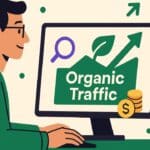
In the digital world, visibility is the oxygen that keeps your website alive. For publishers, whether you run a news portal, a niche blog, or a content platform, attracting readers is the first step. But not just any readers: the ones who arrive because they actively searched for what you offer. This is the power of organic traffic. It represents the most solid and sustainable foundation for your content’s growth, authority, and monetization.
This definitive guide is crafted for you, the publisher. We’ll delve deep into what organic traffic truly means, why it’s so valuable, and how you can build and optimize it. We’ll cover the most effective strategies for SEO, Generative Engine Optimization (AEO), EEAT, and the importance of GEO context, all to ensure your website is not only found but becomes a trustworthy and highly profitable reference.
Tabela de conteúdos (Índice)
1. What Is Organic Traffic and Why Is It Your Website’s Crown Jewel?
Organic traffic refers to visitors who arrive at your website through unpaid results from search engines like Google, Bing, YouTube, or other specialized search platforms. Simply put, these are individuals who typed a question or a term, and your content appeared as a relevant answer, leading them to click.
It stands apart from paid traffic (ads), direct traffic (typing your URL), or referral traffic (from social media or other websites).
Why Is Organic Traffic the Most Valuable Asset for Your Website?
- Sustainability and Zero Cost Per Click: Once your content ranks, it continues to attract visitors without you directly paying for each click. It’s a long-term asset that generates continuous results.
- Qualified and Engaged Readers: People actively searching for a topic already have an interest in that subject. Organic traffic brings in individuals with clear intent, which translates into longer time on site, more page views, and higher engagement with your content and advertisements.
- Brand Authority and Trust Building (EEAT): By ranking well on Google, your website is perceived as a reliable and authoritative source. This is crucial for your brand’s reputation and for Google to recognize your site as an expert in its niche.
- Better Monetization: Qualified and engaged readers are more valuable to advertisers. This means your ad inventory will command a higher CPM (Cost Per Mille/Thousand Impressions), resulting in increased revenue for your site.
- Foundation for Other Strategies: Organic traffic strengthens your domain authority, making your paid campaigns more efficient and your social media efforts more impactful.
2. The Fundamental Pillars of Organic Traffic for Publishers
Attracting organic traffic isn’t magic; it’s a blend of science and dedicated effort. The following pillars form the bedrock of any successful strategy.
High-Quality and Relevant Content
Content is king, and for organic traffic, this means:
- Originality and Depth: Go beyond the basics. Offer unique insights, in-depth analyses, investigative reports, original data, or perspectives not easily found elsewhere. For a news site, this means going beyond the “what” to the “why” and “what’s next.”
- Audience Relevance: Your content must directly address your target audience’s questions, pain points, and interests. It should solve a problem or satisfy a curiosity.
- Accuracy and Reliability: Fact-checked information is indispensable. For news publishers, accuracy is the foundation of credibility. Cite trustworthy sources and update information when necessary.
- Diverse Formats: Use text, high-quality images, videos (for YouTube or embedded on your site), audio (podcasts), infographics, and interactive elements. This enhances the user experience and appeals to different types of readers.
- Evergreen Content: Beyond daily news, invest in guides, tutorials, and explanatory articles that remain relevant over time, attracting continuous traffic.
Strategic Keyword Research
Keywords are the bridge between a user’s search query and your content.
- Intent Identification: Understand what the user truly wants when typing a term. Are they seeking information (what is?), a solution (how to?), a comparison (best X vs. Y?), or something to purchase/hire (what’s the best…?)?
- Long-Tail Keywords: Focus on more specific phrases (e.g., “best SEO strategies for news websites in Brazil”). These often have lower volume but bring highly qualified readers and face less competition.
- Trend Analysis: Use tools like Google Trends to identify trending topics and create timely content that can generate rapid spikes in organic traffic.
- Essential Tools: Utilize Google Keyword Planner, Semrush, Ahrefs, or Ubersuggest for search volume, difficulty, and keyword ideas. Also, pay attention to “People also ask” and “Related searches” sections directly on Google.
SEO On-Page and Technical Optimization
Your website’s and content’s structure needs to be search engine-friendly.
- Appealing Titles (H1): Include your primary keyword in the title, making it clear and inviting for a click.
- Optimized Meta Descriptions: Write concise summaries that appear in search results, including the keyword and a call to action.
- Clean URLs: Keep URLs short, descriptive, and containing the keyword.
- Content Structure: Use headings (H2, H3) to organize text, short paragraphs, and bold text to highlight information.
- Image Optimization: Use descriptive file names and alt text with relevant keywords. Compress images for speed.
- Internal and External Linking: Connect related articles within your site (internal linking) and cite trustworthy external sources (external linking).
- Website Speed (Core Web Vitals): Fast websites are a priority for Google. Optimize Core Web Vitals (LCP, FID, CLS) to improve ranking and user experience. This is especially vital for news sites, which need to load in seconds.
- Mobile Responsiveness: Your site must function perfectly on mobile phones. Most traffic comes from mobile devices, and Google prioritizes mobile-friendly sites.
- Schema Markup (Structured Data): Implement markups like
NewsArticleorArticlefor Google to better understand your content, increasing the chances of rich snippets.
3. Generative Engine Optimization (AEO): Preparing Your Content for the New Era of Search
The evolution of AIs and search assistants is transforming how information is consumed. AEO ensures your content provides the answer.
Direct and Concise Answers
For your content to be used by AIs or appear as featured snippets, provide the main information directly and concisely at the beginning of the paragraph, immediately after the question or in the section title.
Structured Formats for Extraction
- Use numbered lists or bullet points to present steps, items, or summaries.
- Employ tables for comparisons or data summaries.
- Create “Frequently Asked Questions (FAQs)” sections with clear Q&A pairs. Implement Schema Markup (FAQPage schema) to signal these to search engines for rich snippets.
Clear Definitions
If you’re defining a term, provide a bolded, concise definition early in the content.
Concise Summaries
Offer brief summaries at the end of complex sections to aid comprehension and extractability.
EEAT (Experience, Expertise, Authoritativeness, Trustworthiness): Building Unquestionable Credibility
Google places immense value on the quality and reliability of content, especially for topics that could impact a user’s health, finances, or safety (YMYL – Your Money or Your Life).
Experience (E)
Show practical, first-hand experience. Share how your business solved problems for clients, providing concrete examples. If the author has direct experience, share it to make the content more relatable and authentic.
Expertise (E)
Demonstrate deep knowledge of the subject. Back up claims with verifiable data from reputable sources (industry reports, academic studies). Go beyond surface-level information to provide truly insightful perspectives. Ensure author bios are prominent, detailing their qualifications, experience, and any relevant awards or certifications.
Authoritativeness (A)
Prove your content is recognized as a leading voice. Encourage other reputable sites to link to your valuable content. Highlight any media mentions, awards, or recognitions your business or its experts have received. If your company contributes to industry standards or research, showcase this.
Trustworthiness (T)
Build user and search engine trust. Always provide accurate information. If updates or corrections are made, be transparent about them. Have easily accessible Privacy Policies, Terms of Service, and a clear Editorial Policy (for news/information sites). Make it easy for users to contact you (phone, email, physical address if applicable). Ensure your site uses SSL encryption, indicated by HTTPS, which is a basic trust signal.
4. Monetizing Through Organic Traffic: Your Content, Your Revenue
Organic traffic is not just about visibility; it’s a direct pathway to enhanced monetization for publishers.
Higher Ad Revenue (CPMs)
Readers who find your content through organic search are often highly engaged and interested in specific topics. This makes them more valuable to advertisers, leading to higher CPMs for your ad inventory. Ad networks like Grumft prioritize quality traffic because it translates into better performance for advertisers, which in turn means more revenue for you.
Increased Conversions
Whether you offer subscriptions, sell products (e-commerce), or generate leads, organic traffic converts better. The user’s initial intent aligns directly with your content’s offering, leading to a higher likelihood of conversion.
Attracting Premium Advertisers
A site with a strong organic presence and a highly engaged audience signals quality and authority to potential advertisers. This can open doors to direct sales deals and premium branded content opportunities that offer higher payouts than programmatic ads alone.
Sustainable Revenue Growth
Unlike paid traffic, which stops when your budget runs out, organic traffic provides a continuous stream of visitors and revenue as long as your content remains relevant and well-ranked. This creates a predictable and growing income stream.
Reduced Marketing Costs
The more organic traffic you attract, the less you might need to spend on paid acquisition channels, freeing up budget for content creation or other strategic investments.
5. Organic Traffic in Specific Markets: Leveraging GEO (Geographic Search Optimization)
Attracting organic traffic can also be refined by focusing on specific geographical areas, which is particularly relevant for businesses with a local or regional focus.
Local Intent Keywords
For businesses serving a specific city, state, or region, optimizing content with local keywords is essential (e.g., “best pizza delivery in Brooklyn,” “news updates for Austin, TX”). This ensures your content appears for local searches.
Google My Business Optimization
For brick-and-mortar businesses or services tied to a physical location, optimizing your Google My Business profile is crucial. This directly impacts your visibility in local search results and Google Maps.
Local Content Creation
Create content that directly addresses issues, events, or interests specific to a locality. A news publisher, for instance, might cover local council meetings, community events, or local business spotlights.
Country-Specific Nuances
Even within English-speaking markets, there can be subtle differences. For example, “football” means different things in the US vs. the UK. Understanding these nuances in language and search behavior for your target audience (e.g., US, UK, Canada, Australia) is important for effective keyword targeting.
Local Partner Relevance
For publishers looking to monetize, local organic traffic is highly attractive to local businesses wanting to advertise. Ad tech partners like Grumft can help connect this localized, high-value traffic with relevant local demand sources, increasing CPMs for geographically targeted impressions.
6. Sustaining Organic Traffic Growth: Challenges & Solutions
While organic traffic is highly rewarding, its pursuit comes with specific challenges that require proactive strategies.
Algorithm Updates
Search engine algorithms constantly evolve, which can impact your rankings and traffic.
- Solution: Stay informed about core algorithm updates and SEO best practices from official sources like Google Search Central. Focus on creating high-quality, user-first content that inherently aligns with Google’s long-term goals, rather than chasing short-term hacks.
Content Saturation
Many topics are highly competitive, making it difficult to stand out.
- Solution: Refine your niche further. Focus on underserved long-tail keywords. Create comprehensive “pillar pages” or “topic clusters” that cover a subject exhaustively, positioning your site as the definitive resource.
Technical Debt
Website technical issues (e.g., slow loading, broken links, crawl errors) can hinder organic performance.
- Solution: Regularly conduct technical SEO audits using tools like Google Search Console and Screaming Frog. Prioritize fixing Core Web Vitals issues. Ensure your sitemap is up-to-date and your robots.txt file is correctly configured.
Lack of Link Building
Without quality backlinks, even great content can struggle to rank.
- Solution: Develop a strategic link-building plan. This can include guest blogging on authoritative sites, reaching out to relevant publications for mentions, building relationships with industry influencers, and creating linkable assets (e.g., original research, unique data visualizations).
Slow Initial Growth
Building organic traffic takes time and consistent effort.
- Solution: Manage expectations – SEO is a marathon, not a sprint. Supplement organic efforts with strategic paid promotion (e.g., social media ads, native advertising) to drive initial traffic and build brand awareness while organic rankings mature.
Frequently Asked Questions (FAQs)
What is the main benefit of organic traffic for my website?
The main benefit of organic traffic is its sustainability and cost-effectiveness; it brings qualified visitors to your site without direct payment for each click, building long-term authority and revenue.
How long does it take to get organic traffic to a new website?
It typically takes several months, usually 6 to 12 months, for a new website to start seeing significant organic traffic, as search engines need time to crawl, index, and establish the site’s authority.
Does social media activity directly affect organic search rankings?
No, social media activity does not directly affect organic search rankings. However, it can indirectly boost SEO by increasing content visibility, driving traffic to your site (which can lead to engagement signals), and attracting backlinks from other websites.
What are Core Web Vitals and why are they important for organic traffic?
Core Web Vitals are a set of metrics (Largest Contentful Paint, First Input Delay, Cumulative Layout Shift) that measure user experience on a web page. They are important because Google uses them as ranking signals, so optimizing them can improve your organic traffic.
How can I track my organic traffic?
You can track your organic traffic using tools like Google Analytics (to see visitor data) and Google Search Console (to see search queries, impressions, and click-through rates from Google Search).
Conclusion
Organic traffic isn’t merely a traffic source; it’s a strategic investment in your website’s future. By consistently prioritizing high-quality content, meticulous SEO, proactive AEO, and a strong EEAT profile, publishers can build a robust, sustainable stream of engaged readers. This foundation not only secures your site’s visibility but also unlocks its full potential for long-term revenue and influence in the digital landscape.
Ready to build a powerful organic traffic engine for your website? Grumft specializes in optimizing digital revenue for publishers. We understand the nuances of attracting high-quality organic traffic and translating it into maximum ad revenue. Connect with our experts and let’s discuss how we can help your content dominate search results and maximize your monetization potential.
Further Reading & Resources
- Google Search Central Blog: SEO Starter Guide
- Semrush Blog: What is Organic Traffic?
- Ahrefs Blog: How to Get More Organic Traffic
- Grumft: Strategic Blogging: Unlocking Business Growth, Authority, and Revenue
- Grumft: Article Titles: The Gateway to Your Content’s Success
🚀 Join the Monetization Revolution!
Follow Grumft on LinkedIn for exclusive SEO, engagement and revenue insights delivered straight to your feed.
Follow Grumft on LinkedInLeia também:

O Império do Tráfego: Como mudar o jogo e ter leitores leais (Ainda em 2025)

The Content Monetization Formula: 5 Keys to Boosting Your Publisher Revenue

Your Analytics Lie: How to Spot Invalid Traffic and Protect Your Earnings





Autor(a):
Fernanda Calandro
Online desde 1997, sou uma profissional de marketing e conteúdo com formação robusta em marketing. Especializada em simplificar temas complexos através das minhas redações, eu facilito a conexão entre publishers e especialistas, promovendo um entendimento claro e acessível.


