Bids That Win
Understanding Real-Time Bidding (RTB): A Publisher’s Guide to Higher Monetization

Learn how publishers can optimize Real-Time Bidding to increase CPM, eCPM, and ad revenue in 2025.
In the fast-paced world of programmatic advertising, Real-Time Bidding (RTB) is no longer just a technical buzzword — it’s the backbone of modern ad monetization. For publishers managing websites and apps, understanding RTB is essential to maximize yield, attract premium advertisers, and increase CPMs.
The programmatic ecosystem has grown rapidly. According to eMarketer, global programmatic ad spend exceeded US$ 600 billion in 2024, and RTB accounts for the vast majority of these transactions. In Brazil, where digital advertising spend is projected to grow 12% in 2025 (IAB Brasil), publishers who fully leverage RTB can see up to 35% revenue growth during peak seasons.
In this guide, we’ll break down how RTB works, how publishers can optimize bidding environments, and the strategic steps to unlock its full monetization potential.
Tabela de conteúdos (Índice)
What is Real-Time Bidding (RTB)?
RTB is a programmatic auction model where ad impressions are sold and bought in real time. The process takes place in milliseconds, every time a user loads a page or opens an app with available ad space.
Key RTB Components for Publishers:
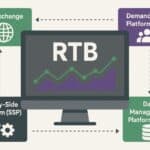
- Ad Exchange – The marketplace where impressions are auctioned.
- Supply-Side Platform (SSP) – The publisher’s technology partner that connects their inventory to demand sources.
- Demand-Side Platform (DSP) – The advertiser’s platform for bidding on impressions.
- Data Management Platform (DMP) – A system that stores and analyzes audience data to improve targeting.
How Real-Time Bidding Works – Step by Step
- User Visits Your Site/App
An available ad slot triggers a bid request to your SSP. - Audience Data is Sent
The SSP shares anonymous user data (location, device type, browsing behavior) with connected DSPs. - Advertisers Place Bids
Each DSP evaluates the impression and decides how much to bid, based on targeting criteria and campaign goals. - Highest Bid Wins
The winning creative is delivered instantly, usually within 120 milliseconds. - Publisher Gets Paid
The winning advertiser’s bid price (minus SSP/DSP fees) becomes your revenue for that impression.
WhyReal-Time Bidding is Crucial for Publisher Revenue
For publishers, RTB offers more than just automated selling — it’s a dynamic pricing mechanism that ensures every impression is sold at its highest market value.
Advantages for Publishers:
- Higher CPMs via Competition – More bidders mean better prices.
- Access to Premium Demand – Global advertisers can bid on your inventory.
- Full Control of Inventory – Block low-quality ads and set price floors.
- Audience Value Monetization – First-party data can drive bids higher.
Optimizing Real-Time Bidding for Maximum Monetization
1. Set Clear Yield Goals
Before adjusting any RTB settings, define your objectives: higher CPM, increased fill rate, better viewability, or improved user experience.
2. Leverage Price Floors and Dynamic Pricing
Price floors prevent undervaluing impressions. Tools with AI-driven price optimization can adjust floors in real time to capture peak bids without sacrificing fill rate.
3. Improve Ad Viewability
Ad viewability is a key factor in bidder confidence. Ads that meet or exceed 70% viewability often command higher CPMs (Google Ad Manager Benchmarks).
4. Activate First-Party Data
With third-party cookies fading, publishers with strong first-party audience segments can sell higher-value impressions in private marketplace (PMP) deals.
5. Optimize for Seasonal Peaks
Dates like Children’s Day, Black Friday, and Christmas can drive 20–40% higher CPMs. Prepare themed content early to match advertiser demand.
6. Use Header Bidding for More Competition
Connecting multiple demand sources in a header bidding setup increases bid density and revenue.
7. Monitor and Adjust in Real Time
Track metrics such as bid response rate, win rate, and revenue per mille (RPM) to identify optimization opportunities instantly.
Common RTB Mistakes Publishers Should Avoid
- Setting price floors too high, leading to unsold inventory.
- Not refreshing ads on long user sessions, missing additional bid opportunities.
- Ignoring ad quality controls, which can harm user experience and traffic retention.
- Failing to test new formats like native, in-app, or rich media that attract premium bids.
The Future of Real-Time Bidding – Trends to Watch in 2025
- AI-Powered Bidding – Machine learning optimizes bids in real time based on user signals.
- CTV and Audio Inventory – Connected TV and programmatic audio are attracting higher CPMs than display.
- Contextual Targeting 2.0 – Privacy-compliant targeting based on content relevance is making a strong comeback.
- Programmatic Guaranteed Deals – More advertisers are locking in premium inventory ahead of time.
FAQ – Real-Time Bidding for Publishers
Does RTB always give the highest possible CPM?
Generally yes, but results depend on competition, audience value, and optimization.
Can small publishers benefit from RTB?
Absolutely — RTB allows even small sites to access global demand sources.
How important is first-party data in RTB?
Critical. Quality audience segments can increase bids significantly.
What’s the difference between RTB and Programmatic Direct?
RTB is open auction; Programmatic Direct is a fixed-price deal.
Should I use multiple SSPs?
Yes, to increase competition and reduce reliance on a single partner.
How fast should I see results from RTB optimization?
Some improvements are immediate, but data-driven strategies show best results over 30–60 days.
Conclusion: Maximize RTB Revenue with Grumft
RTB is more than a bidding mechanism — it’s a monetization engine. Publishers who master its dynamics can consistently drive higher CPM, eCPM, and total revenue.
That’s where Grumft comes in. As a Google AdX (MCM) partner, we connect publishers with premium demand, predictive price floor technology, and proprietary tools like GPush — a web push notification solution with zero monthly fees, operating on a transparent ad revenue share model.
Our AI-driven approach ensures every impression is sold at its optimal value, while our expert team helps you align content, audience data, and inventory strategy for sustainable growth.
Additional Resources
- IAB – Programmatic 101
- Google Ad Manager – About Real-Time Bidding
- eMarketer – Global Programmatic Forecasts
- IAB Brasil – Privacy and Data in Advertising
🚀 Join the Monetization Revolution!
Follow Grumft on LinkedIn for exclusive SEO, engagement and revenue insights delivered straight to your feed.
Follow Grumft on LinkedInLeia também:

How to Unlock Your Blog’s True Earning Potential in 2025: A Grumft Guide for Publishers

Programmatic Advertising is Coming For Your Revenue. Are You Ready to Fight Back?

Publishers vs. Advertisers: The Core Difference That Fuels Your Revenue





Autor(a):
Fernanda Calandro
Online desde 1997, sou uma profissional de marketing e conteúdo com formação robusta em marketing. Especializada em simplificar temas complexos através das minhas redações, eu facilito a conexão entre publishers e especialistas, promovendo um entendimento claro e acessível.


